Original Theatrical Score
Written for piano, orchestra, and children’s choir, the score explores Annie’s fractured mind and Paul’s snowbound world — with music designed to adapt to different productions.
Credits
Music by Matthew Smedal
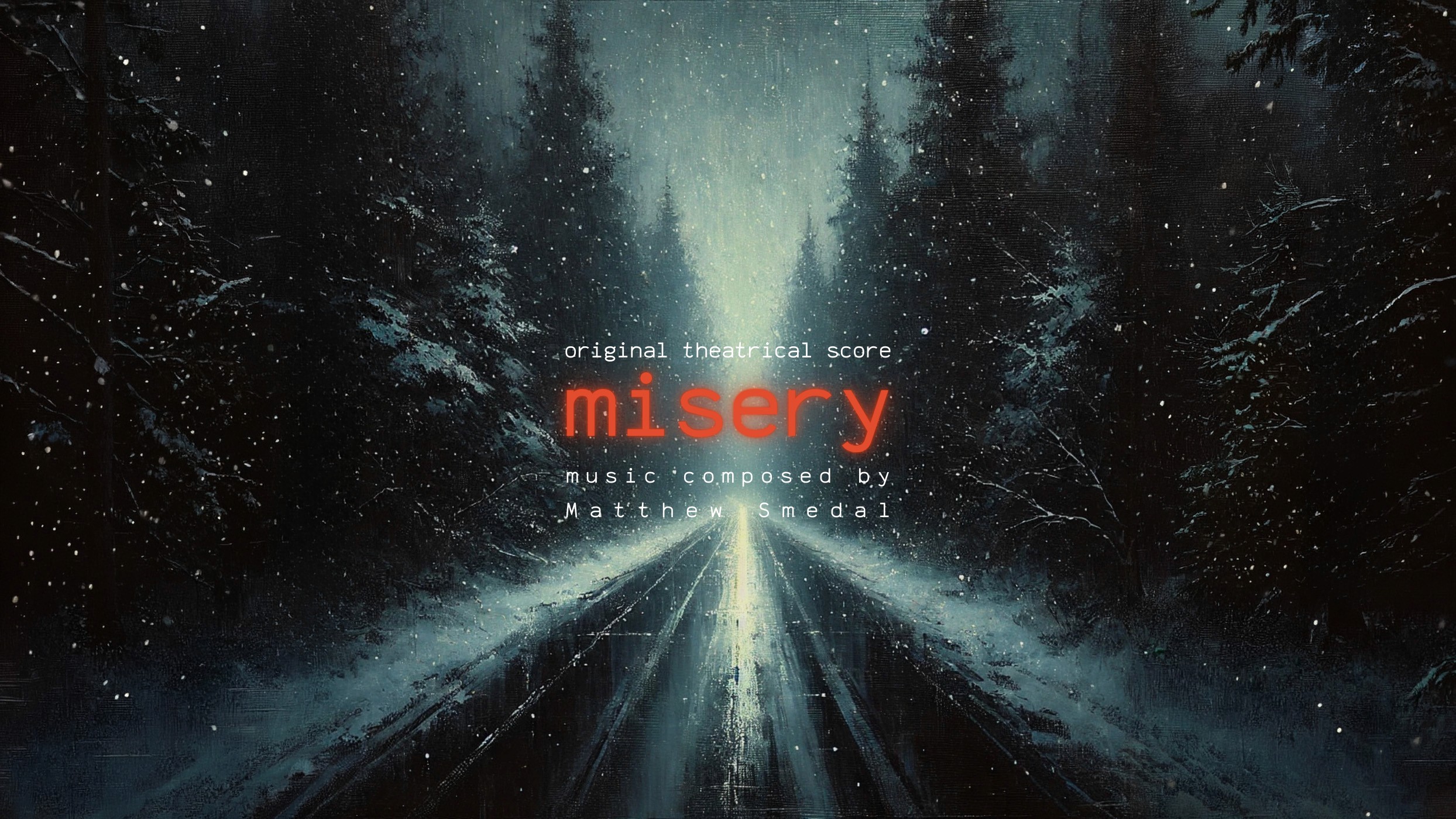
Selected cues from the score, originally created for Denis Jones’ production at the Maltz Jupiter Theatre.
03 / Context
I began writing my score to Misery with a small ensemble in mind. Five players only: piano and string quartet. My original thought was that the play was small, so the music should be small. And I wrote some cues that I would describe as “standard theatre incidental music.” A few plinks here, a plunk or two there, followed by something pretty dissonant and... scene.
We've all heard that type of theatrical score before, and it wasn’t working.
Yes, the play itself is small — one house, three actors — but the subject matter and the emotions are huge. I found I was doing the play a disservice by conceiving of the score as a small piece. Annie’s emotions are BIG, and Paul’s terror is real. I needed the music to support both.
The addition of the children’s choir changed everything. Angelic and terrifying at the same time, the score suddenly sprang to life once the kids started singing. Themes emerged. Patterns untangled themselves. The kids unleashed a cinematic world of scoring. Suddenly, there was life in the writing.
And while I wanted the kids to sing actual words, I didn’t want their words to compete with the text of the play. So the kids sing in Latin, frequently making reference to religious imagery. And that allowed for a natural commentary on Annie’s thinking, and Paul's predicament.
I hope you find the score as mesmerizing as I do. I’d love the opportunity to adapt it for another production and discover what it can become in a new room.
~ Matt Smedal